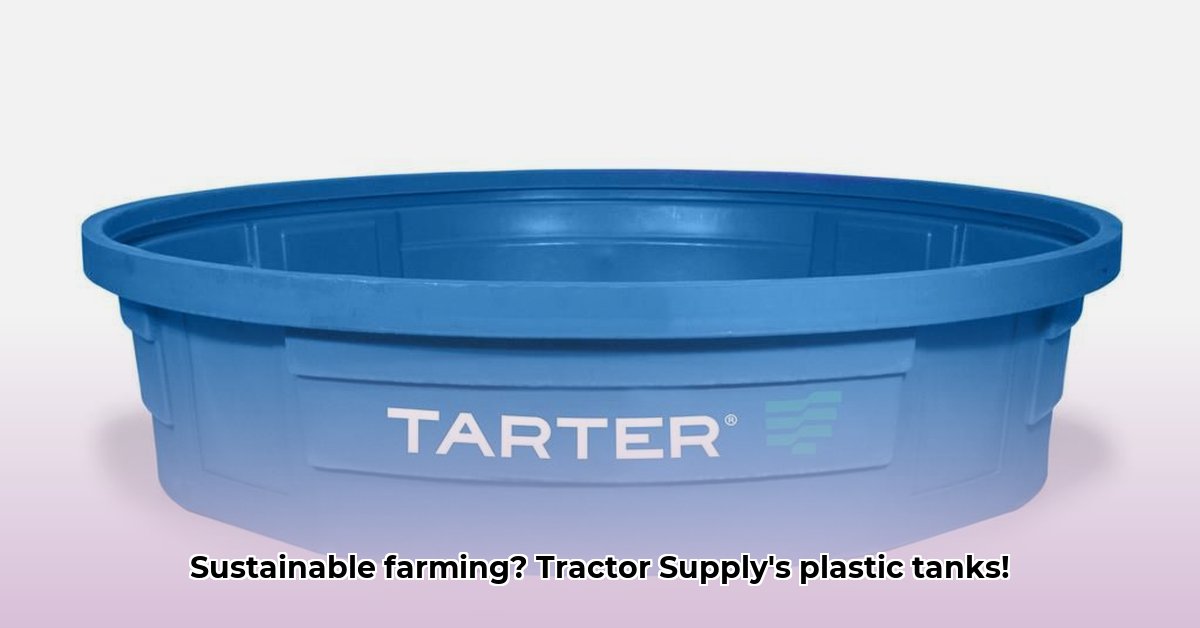
Understanding Polyethylene Tanks for Sustainable Agriculture
Choosing the right storage tank is crucial for efficient and sustainable farming. Tractor Supply offers a range of polyethylene (plastic) tanks suitable for various agricultural applications, from storing water to handling fertilizers and pesticides. This guide helps you select, use, and dispose of these tanks responsibly, minimizing your environmental impact. For added tank functionality, consider a tank heater.
Types and Sizes of Polyethylene Tanks at Tractor Supply
Tractor Supply provides a variety of polyethylene tanks in different shapes, sizes, and capacities. The selection caters to diverse farm sizes, from small-scale operations to large-scale agricultural businesses. Consider these factors when choosing:
- Capacity: Determine your liquid storage needs. Accurate assessment prevents both unnecessary expense and shortages.
- Space: Measure your available space carefully to ensure the tank fits comfortably without impeding workflow.
- Chemical Compatibility: Verify tank compatibility with the substances you intend to store. Consult the manufacturer's specifications to avoid chemical reactions or leaching. (Leaching: the process by which chemicals seep out of the tank material and contaminate the stored liquid).
Advantages and Disadvantages of Polyethylene Tanks
Polyethylene tanks offer several benefits, but potential drawbacks must also be considered for responsible agricultural practices.
Advantages:
- Durability and Longevity: HDPE (high-density polyethylene) tanks are resistant to rust and corrosion, extending their lifespan and reducing replacement costs.
- Cost-Effectiveness: Generally, plastic tanks are more affordable than comparable metal tanks.
- Easy Maintenance: The smooth surfaces are easy to clean, preventing residue buildup.
- Lightweight (for smaller sizes): Smaller tanks are easier to move and handle.
Disadvantages:
- Environmental Impact: Plastic production consumes resources and energy. End-of-life disposal needs careful consideration to avoid environmental pollution.
- Potential for Chemical Leaching: Lower-quality plastics may leach chemicals into stored liquids. Always choose high-quality, food-grade HDPE tanks from reputable manufacturers.
- UV Degradation: Prolonged sun exposure can weaken some plastics. Look for tanks with UV stabilizers.
- Disposal Challenges: Recycling programs for large plastic tanks vary. Check your local options before purchasing.
Choosing the Right Polyethylene Tank: A Step-by-Step Guide
- Assess Your Needs: Determine the primary use (water storage, chemical mixing, etc.), volume required, and budget.
- Size Selection: Choose a size with a small margin for safety, avoiding overfilling which can compromise the tank’s structural integrity.
- Material Selection: Prioritize high-density polyethylene (HDPE) for superior chemical resistance and longevity. Select tanks specifically designed for agricultural applications.
- Check for Key Features: Look for UV protection, sturdy handles, secure lids, and reinforced walls for enhanced durability and safety.
- Safety Considerations: Ensure secure fittings and user-friendly handles or lifting points for safe handling.
- Transportation and Placement: Consider how you'll transport and place the tank; ensure easy maneuverability and placement. (Improper placement can lead to leaks or damage).
Safe Handling, Cleaning, and Maintenance of Polyethylene Tanks
Proper tank maintenance extends its lifespan and prevents accidents.
- Regular Inspections: Inspect for cracks, leaks, or damage; address issues promptly. (Regular inspections can prevent significant problems before they occur).
- Thorough Cleaning: Clean thoroughly after each use, removing all residues with appropriate cleaning agents.
- Safe Storage: Store in a sheltered location to protect from the elements and potential damage.
Sustainability Considerations: Minimizing Environmental Impact
Responsible farming practices require minimizing the environmental footprint of all equipment.
- Recycling: Inquire about local recycling programs for polyethylene tanks at the end of their lifespan. (Recycling reduces landfill waste and conserves resources).
- Sustainable Alternatives: Research biodegradable or recycled plastic options as more sustainable alternatives become available.
- Extended Use: Proper maintenance significantly extends the tank’s lifespan, reducing the need for frequent replacements. (Proper maintenance can significantly reduce the long-term environmental impact).
Integrating Plastic Tanks with Farm Equipment and Precision Spraying Techniques
Polyethylene tanks are highly versatile and compatible with most farm equipment.
- Compatibility: Ensure compatibility with pumps, sprayers, and other existing equipment. Use adapters if necessary.
- Strategic Placement: Position the tank strategically to optimize workflow and minimize the distance needed to transport liquids.
- Precision Spraying: Integrate with precision spraying systems to optimize chemical usage and reduce runoff, improving efficiency and environmental stewardship. (Precision spraying minimizes chemical use while maximizing effectiveness).
Conclusion: Choosing the Right Tank for Sustainable and Efficient Farming
Selecting the appropriate polyethylene tank enhances farming efficiency and minimizes environmental impact. By carefully considering the factors discussed above – from initial assessment of your needs to responsible end-of-life disposal – you'll make an informed decision that supports both robust farm operation and sustainable agricultural practices. The future of sustainable agriculture depends on such careful choices.